Three Rivers Petroglyph Site: Ancient Art Near Ruidoso
Most people visiting Ruidoso spend their time in the mountains and never make it down to the desert floor. That's understandable. The pines are calling, the trails are good, and there's plenty to do in town. But if you have one spare afternoon and want to see something that'll genuinely stop you in your tracks, head down to Three Rivers.
Three Rivers Petroglyph Site sits about 45 minutes southwest of Ruidoso, down US-54 toward Tularosa and then east on a BLM road into the desert. It's run by the Bureau of Land Management, costs $7 per vehicle, and holds over 21,000 individual petroglyphs carved by the Jornada Mogollon people between roughly 900 and 1400 AD. That's not a typo. Twenty-one thousand carvings on a single basalt ridge in the Chihuahuan Desert.
I've lived in this area for years and I still feel something shift in me every time I visit.
Getting There from Ruidoso
From Ruidoso, take US-70 west toward Tularosa, then US-54 south for about 17 miles past Tularosa. Watch for the Three Rivers sign on the left (east side of the highway). The BLM access road is paved for the first section and runs about 5 miles to the site.
Total drive: 45 to 50 minutes depending on where you're starting in Ruidoso. It's a straightforward trip with good roads.
The site is open year-round. Hours are generally 8 AM to 8 PM in summer and 8 AM to 4 PM in winter, but check the BLM website before you go as hours occasionally shift. Cell service gets spotty once you turn off US-54, so download the directions before you leave.
What You'll Find There
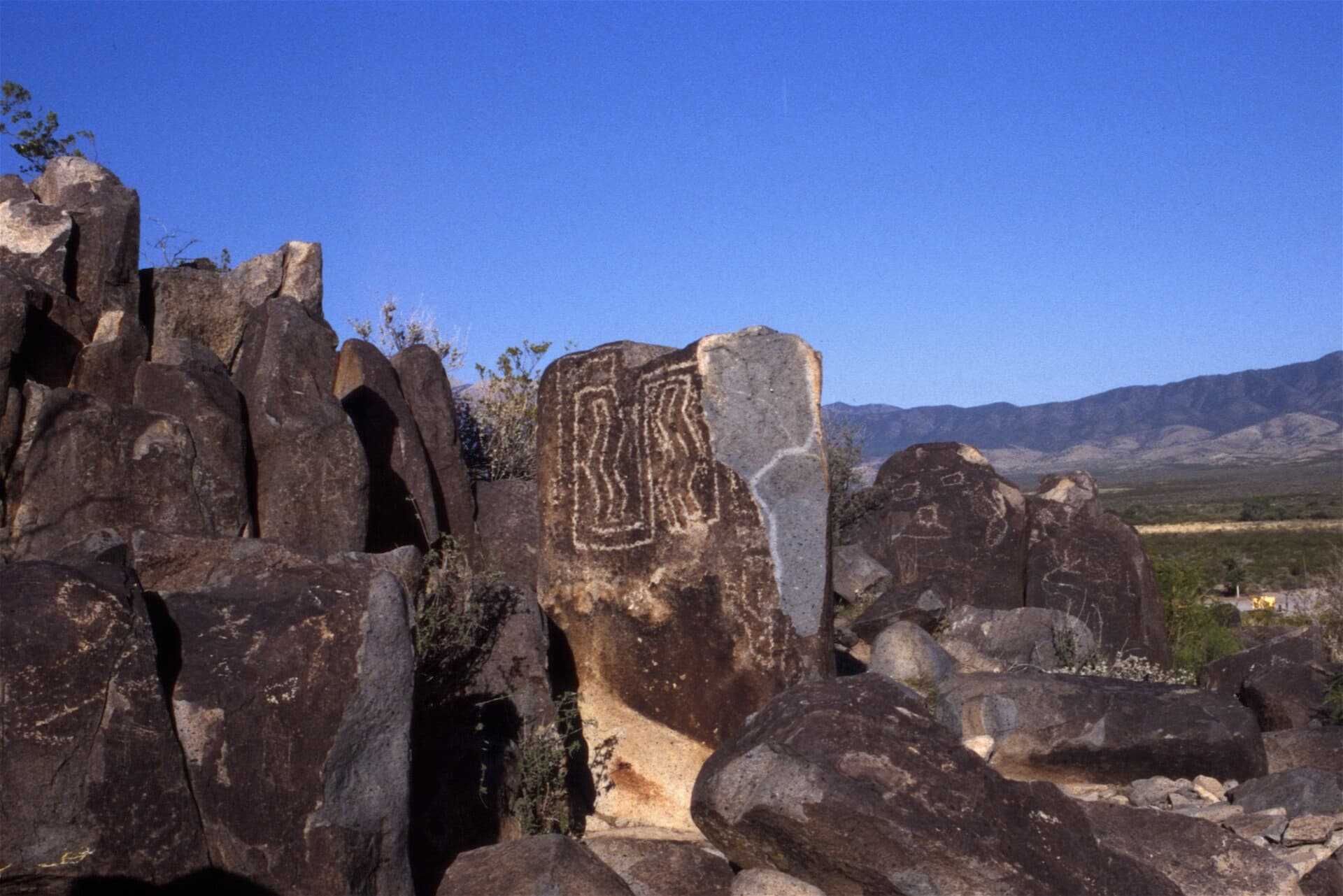
The petroglyphs are carved into a basalt ridge that rises above the Tularosa Basin with dramatic views of Sierra Blanca to the north and the white expanse of what would become White Sands to the south. The Jornada Mogollon people chose this place intentionally, and you can feel why.
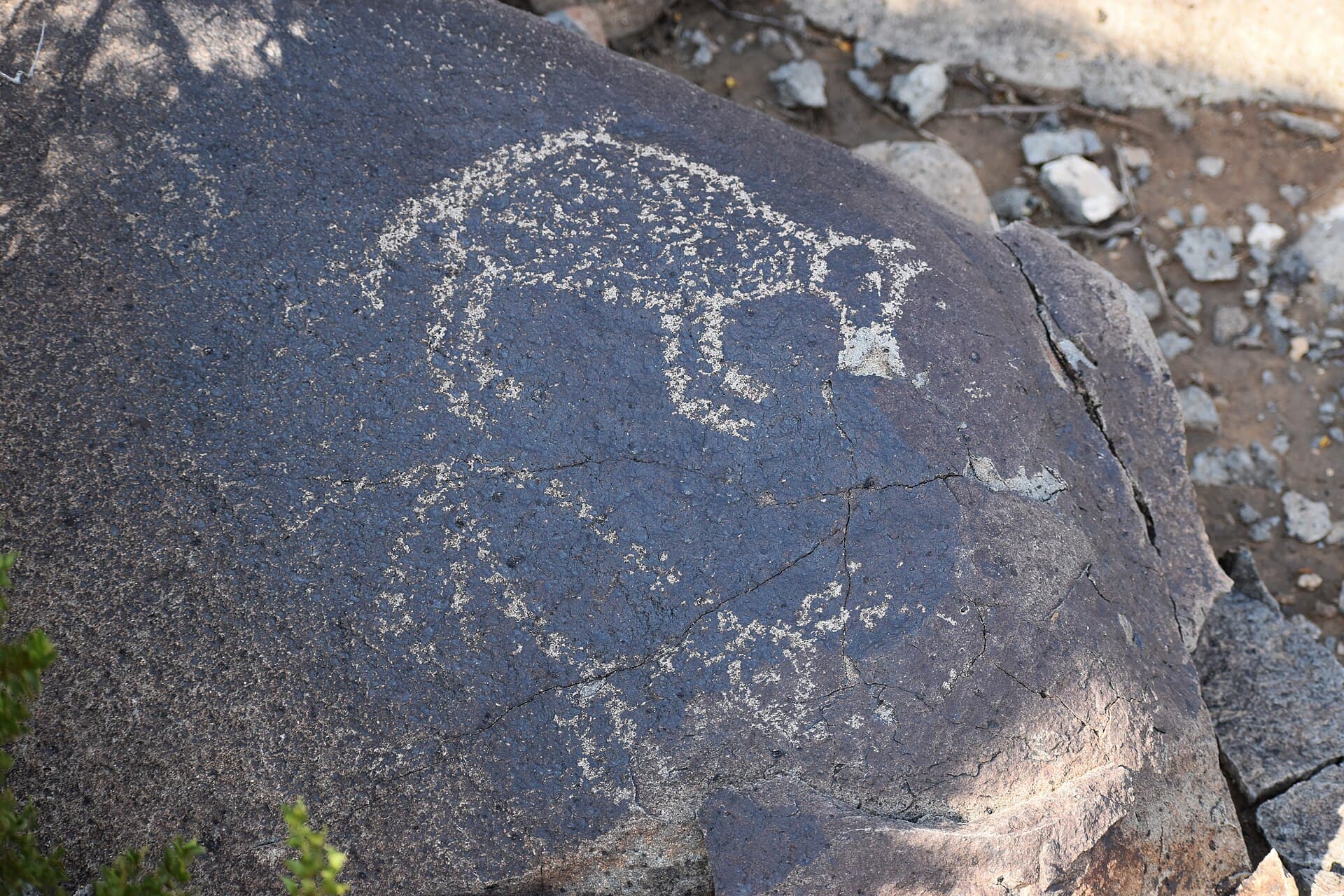
The carvings cover everything: human figures in elaborate ceremonial poses, animals (birds, fish, deer, insects, lizards), geometric patterns, masks, and images that scholars are still interpreting. Some are clearly narrative. Others feel almost abstract. Some are tiny and easy to miss. Others are a foot across and catch the sun in a way that makes them jump off the rock.
What makes Three Rivers different from other petroglyph sites I've visited is the sheer concentration and variety. Most sites have clusters separated by a lot of blank rock. Here the images are dense and continuous along the ridge. You'll round a boulder and find fifty more carvings you hadn't seen.
The Trail
The main trail is just under a mile, with a moderate climb over basalt rock and loose gravel. The site calls it "easy to moderate" and that's mostly accurate, though the footing is uneven and you'll want to watch your step. There are numbered markers along the trail corresponding to an interpretive brochure you can pick up at the entrance kiosk.
A second, shorter trail leads to a partially excavated Jornada Mogollon village site about 0.3 miles in. This is worth the detour: you can see the actual foundation outlines of the rooms where people lived here a thousand years ago.
Allow 1.5 to 2.5 hours to do the site properly. That gives you time to walk slowly, read the interpretive panels, take photos without rushing, and sit for a few minutes at the ridge viewpoint. People who zip through in 45 minutes always say they wish they'd taken longer.
What to Bring
The desert does not forgive under-preparation, even on a day that looks mild:
Water: Bring more than you think you need. One liter per person minimum, two is better. There is no water at the site.
Sun protection: Hat, sunscreen, sunglasses. The basalt absorbs and reflects heat. Even in September or October it can feel intense out there.
Sturdy shoes: Not sandals, not flip-flops. The trail crosses uneven basalt rock. Trail runners or hiking shoes are ideal.
The interpretive brochure: Available at the entrance kiosk for a small fee. Worth having in hand so you know what you're looking at.
Camera: The petroglyphs photograph beautifully in morning or late afternoon when the sun is low and carvings cast shadows. High noon washes them out. Entry is $5 per person, paid at the self-service kiosk.
Why It Deserves More Visitors
Three Rivers rarely makes the top-ten lists for New Mexico tourism, which is a shame. It's more accessible and easier to navigate than Chaco Canyon. The art is as impressive as Petroglyph National Monument near Albuquerque but without the city crowds. And the setting, with Sierra Blanca rising white above the desert, is genuinely stunning.
When guests at 2nd Street Retreat ask me what day trip they shouldn't miss, Three Rivers is always on my short list. You leave the mountains, drop into the desert, walk alongside a thousand years of human history, and come back to the cabin in time for dinner. That's a pretty good Tuesday.
Pack your water, bring the camera, and go slow. The people who carved these rocks weren't in a hurry either.